
Purpose of Mental Health Needs Surveys
The MPH Lens Mental Health Poll Surveys provide critical insights into how Master of Public Health (MPH) students and professionals perceive mental health within public health.
These surveys aim to challenge misconceptions and foster a deeper understanding of mental health perspectives among public health practitioners. By exploring these viewpoints, the data guides the development of strategies to promote holistic well-being in the field.
Introduction
Burnout among public health professionals is a growing concern, exacerbated by recent global health crises. According to the CDC, the prevalence of burnout among health workers rose from 32% in 2018 to 46% in 2022, alongside worsening workplace conditions. Public health students are also significantly affected; intense academic and emotional pressures often contribute to burnout. Perez, Smith, and Luquis (2024) found that:
- 22% of MPH students reported feeling emotionally drained daily.
- Over 50% considered leaving their program, and 13% took active steps to withdraw.
- Despite 97% experiencing burnout symptoms and 93% being aware of on-campus counseling services, only 27% utilized them.
This data underscores a gap between awareness and action regarding mental health resources. While therapy is increasingly recognized as a valuable tool for self-care and resilience, barriers such as stigma and discomfort remain prevalent.
Cultural beliefs also play a significant role, influencing openness to mental health discussions and help-seeking behaviors. Prioritizing mental wellness, therefore, requires a dynamic approach shaped by personal experiences and cultural contexts.
Ultimately, the journey towards prioritizing mental health as an MPH student is a dynamic process shaped by personal experiences, cultural influences, and evolving perspectives.
Key Themes:
Burnout and Resource Utilization: Highlighting the gap between awareness and use of mental health resources.
Cultural Influences: Emphasizing the role of cultural beliefs in shaping mental health perspectives.
Proactive Mental Wellness: Encouraging therapy and self-care as tools for resilience and professional growth.
Stigma Reduction: Advocating for open conversations to normalize mental health support.
Poll Survey Results
The MPH Lens Mental Health Poll Surveys are designed to offer valuable insights into the mental health experiences of public health professionals and students.
It’s important to note that the poll results were collected through LinkedIn surveys, which may not fully represent the diversity of public health students and professionals. While the findings provide valuable insights, they should be interpreted as a starting point for broader discussions and research.
Through the analysis of these results, we seek to determine the prevalence of mental health challenges encountered by our public health peers, ultimately enabling us to offer resources that can healthily help address these concerns.
Comfort Levels of Seeking Therapy
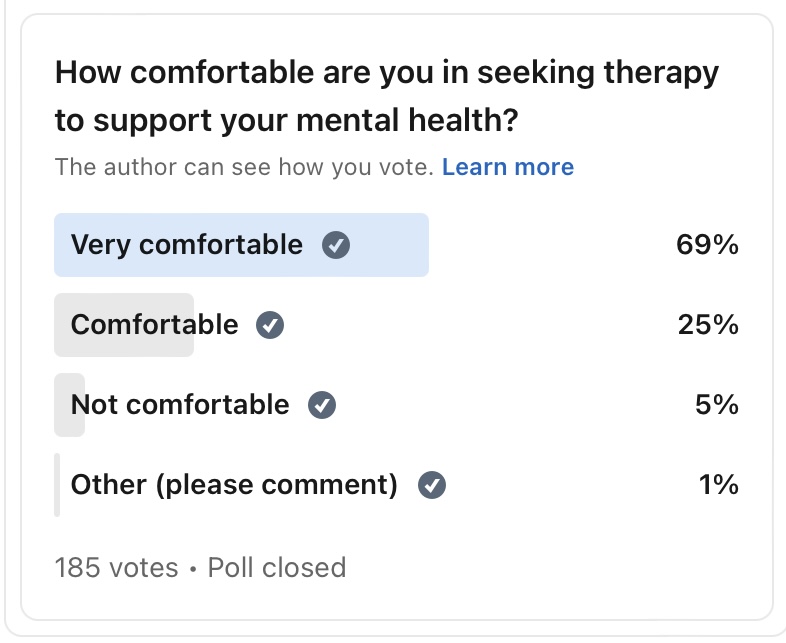
The comfort level of public health students and professionals in seeking mental health support can vary widely based on individual experiences, cultural backgrounds, and their environment.
Mental health stigma and workplace confidentiality concerns can hinder therapy utilization, yet a growing number of public health professionals acknowledge its importance. Among 185 respondents, 94% reported feeling “very comfortable” or “comfortable” seeking therapy, while 6% expressed discomfort.
This highlights the need to continue reducing barriers to access.
Perceptions on the Benefit of Therapy
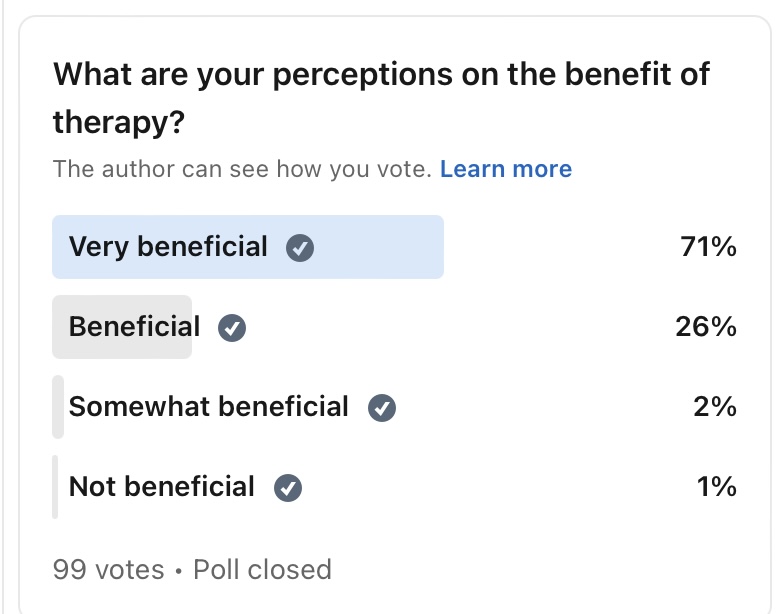
Public health students and professionals play a crucial role in shaping health policies and practices that impact communities. Their perceptions of therapeutic interventions, such as counseling and mental health services, are essential in understanding the broader implications for public health.
Therapy is widely recognized for its role in enhancing self-awareness and community well-being. Of 99 respondents, 97% found therapy “very beneficial” or “beneficial,” compared to just 3% who found it “somewhat beneficial” or “not beneficial.”
This suggests a widespread belief among respondents that therapy is beneficial for mental health.
Cultural Beliefs on Mental Health Perspectives
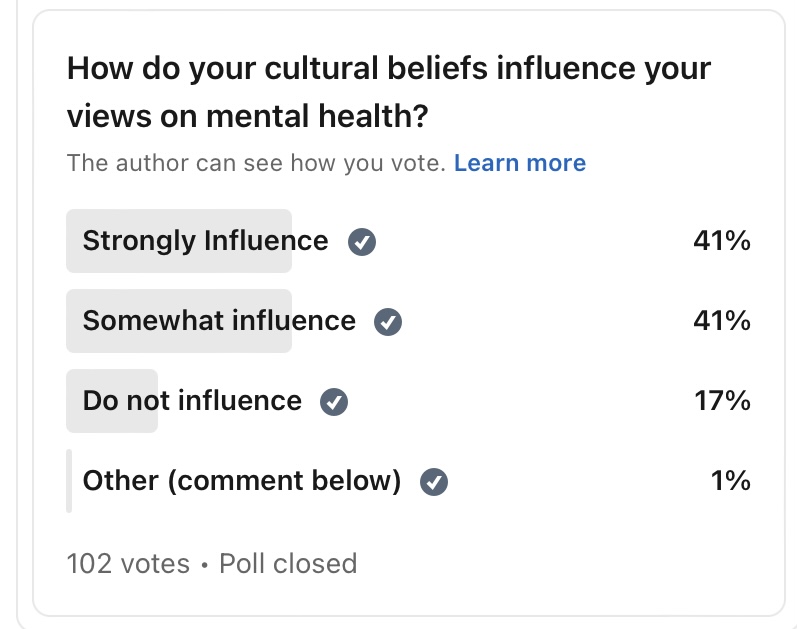
Cultural background profoundly influences attitudes toward mental health. Recognizing the impact of cultural context is essential for developing effective interventions and promoting mental well-being. Different cultural backgrounds can affect attitudes toward seeking help and preferred methods of treatment
Of 102 respondents, 82% stated their cultural beliefs “strongly” or “somewhat” influenced their views, while 18% reported minimal or no influence. This variation underscores the importance of culturally informed mental health interventions.
My Lifestyle Allows Room to Prioritize Mental Illness
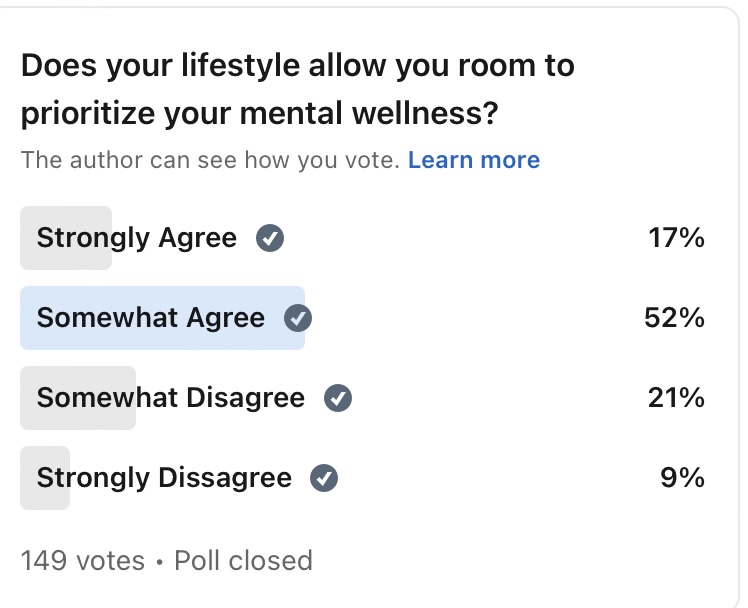
The lifestyle of public health students and professionals plays a significant role in their ability to prioritize mental health and address mental illness effectively. Demanding schedules often hinder public health professionals’ ability to prioritize mental health.
Among 149 respondents, 69% agreed their lifestyle allowed room for mental wellness, while 30% disagreed, emphasizing the need for systemic support and integrative wellness practices.
This data highlights the crucial need for interventions that facilitate better integration of mental health practices into daily life for those who feel their lifestyle does not currently support it.
Advice for Public Health Students and Professionals
Prioritizing mental wellness is essential for personal and professional success in public health. 8 key reasons include:
Personal Well-being:
Your health is the foundation of your impact.
Prioritizing mental wellness helps you balance the demands of public health work, reduce stress, and prevent burnout, allowing you to sustainably thrive in your career.
Role Modeling
Lead by example—your actions inspire change.
By prioritizing your own mental health, you show others that self-care is essential, encouraging them to seek support and normalize discussions around mental wellness.
Enhanced Performance:
A healthy mind drives innovation.
Good mental health sharpens critical thinking, creativity, and decision-making, enabling you to solve complex public health challenges effectively.
Compassionate Care:
Empathy begins with caring for yourself.
When you prioritize your well-being, you create the emotional capacity to connect with and support communities in meaningful and impactful ways.
Addressing Stigma:
Be the change that breaks the silence.
Openly discussing mental health reduces stigma, fosters supportive environments, and empowers others to seek help without fear or judgment.
Holistic Approach
Mental wellness is part of the bigger picture.
Public health values the integration of mental, physical, and social health—embracing this approach enriches your life and strengthens your work.
Community and Support Networks
You’re stronger when you don’t go it alone.
Building connections with peers, mentors, and mental health advocates fosters resilience and provides essential support to navigate the challenges of public health work.
Advocacy for Systemic Change
Transform the system, transform lives.
Championing policies and organizational changes that prioritize mental wellness creates healthier, more supportive environments for public health professionals and the communities they serve.
Conclusion: Why Prioritizing Mental Wellness Matters
“Why Public Health Students & Professionals Need To Prioritize Mental Wellness?”
Prioritizing mental wellness is essential for thriving in public health. By taking care of their mental health, students and professionals can enhance their resilience, productivity, and ability to support the communities they serve. Through open dialogue, self-care, and systemic advocacy, public health practitioners can create a culture that values mental health as a vital part of overall well-being.
Let’s start normalizing mental health in public health